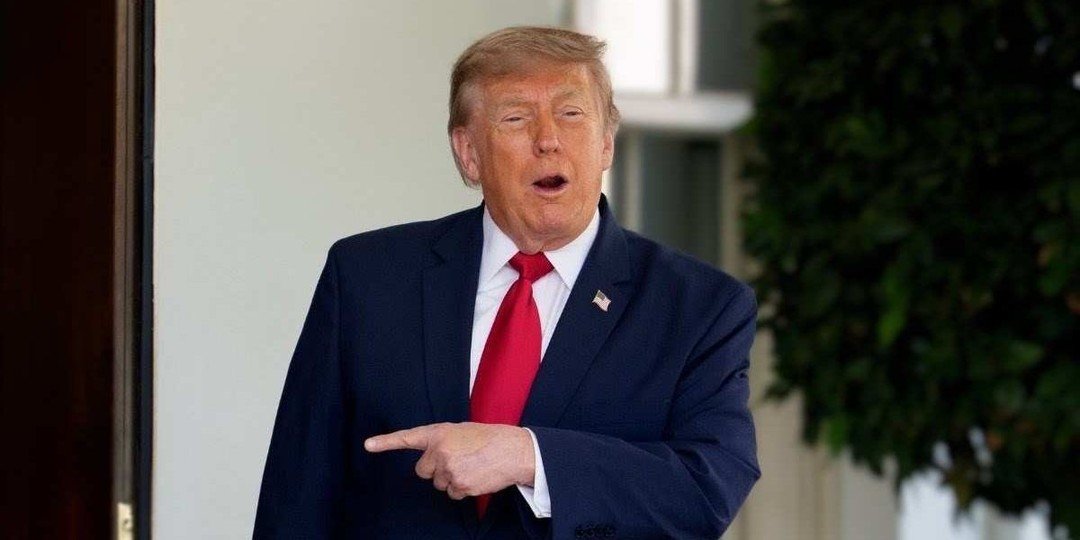
President Donald Trump is facing widespread ridicule after claiming on Truth Social that he has a 59% approval rating, a figure critics say has no basis in any major public opinion survey.
The controversial post appeared Sunday night, when Trump wrote:
“59% Approval Rating. Prices coming down along with the lowering of oil and gas. Thank you! President DJT.”
Notably, Trump did not cite any polling organization or provide evidence to support the claim. Within minutes, political observers, journalists, and social media users began asking the same question: Where did the number come from?
No Major Poll Shows Trump at 59%
Polling aggregators and recent national surveys tell a very different story.
According to widely followed polling averages, Trump’s approval rating has remained well below 50% throughout much of 2026. Most national surveys conducted in late June and early July placed his approval somewhere between the high 30s and low 40s.
Several recent polling averages have estimated Trump’s approval at roughly 37% to 40%, while an Economist/YouGov survey released in early July recorded an approval rating of approximately 36%.
His disapproval numbers, meanwhile, have consistently hovered around 59% to 61%.
That immediately led critics to speculate that Trump may have accidentally—or intentionally—confused his approval rating with his disapproval rating.
Social Media Quickly Fact-Checks the Claim
The Truth Social post quickly spread across X, Threads, Reddit, and other platforms, where thousands of users mocked the unsupported statistic.
Many questioned why no polling organization had ever reported anything close to 59% approval.
Others joked that Trump had invented a poll, while several users pointed out that his claimed number was almost identical to the percentage of Americans who reportedly disapprove of his presidency.
Political commentators also noted that Trump has a long history of citing favorable statistics without identifying their source, making verification impossible.
Polling Has Been a Sensitive Topic
Trump has frequently highlighted polls that portray him positively while dismissing unfavorable surveys as “fake” or politically motivated.
Throughout both of his presidential campaigns and during his time in office, he has regularly argued that mainstream polling organizations underestimate his support.
However, independent polling averages remain one of the most widely accepted ways to measure public opinion because they combine results from multiple organizations rather than relying on a single survey.
In this case, no publicly available national poll appears to support Trump’s claim of a 59% approval rating.
Questions About Cognitive Health Continue
The post also reignited ongoing discussions surrounding Trump’s public statements and cognitive fitness.
Trump has repeatedly promoted the cognitive exams he has taken during routine medical evaluations, often suggesting they demonstrate exceptional intelligence.
Medical experts have long noted, however, that standard cognitive screening tests are designed to detect signs of memory loss or neurological impairment—not to measure intelligence or IQ.
Critics argue that Trump’s increasingly frequent factual errors, exaggerated claims, and unsupported statements continue to fuel public debate about his judgment and reliability.
Supporters, meanwhile, insist that his unconventional communication style is intentional and accuse the media of scrutinizing him more harshly than other politicians.
Approval Ratings Could Matter in the Midterms
The controversy arrives as Republicans prepare for the upcoming congressional midterm elections.
Historically, presidential approval ratings are considered an important indicator of how a president’s party may perform in congressional races. Presidents with approval ratings below 45% often face significant political headwinds.
Political analysts say that if current polling trends continue, Republicans could encounter a more difficult electoral environment than they had hoped.
Whether Trump’s approval numbers improve over the coming months remains uncertain, but analysts expect polling to become an increasingly important issue as campaign season intensifies.
Critics Say Facts Still Matter
While political supporters often disagree over policy, many observers argue that public confidence depends on leaders presenting accurate information.
Trump’s latest social media post has therefore become less about one statistic and more about credibility.
Without citing a recognized poll or providing evidence, the claim of a 59% approval rating remains unsupported by publicly available national polling data.
For critics, the episode serves as another example of why political claims—regardless of who makes them—should be measured against independently verifiable facts rather than accepted at face value.