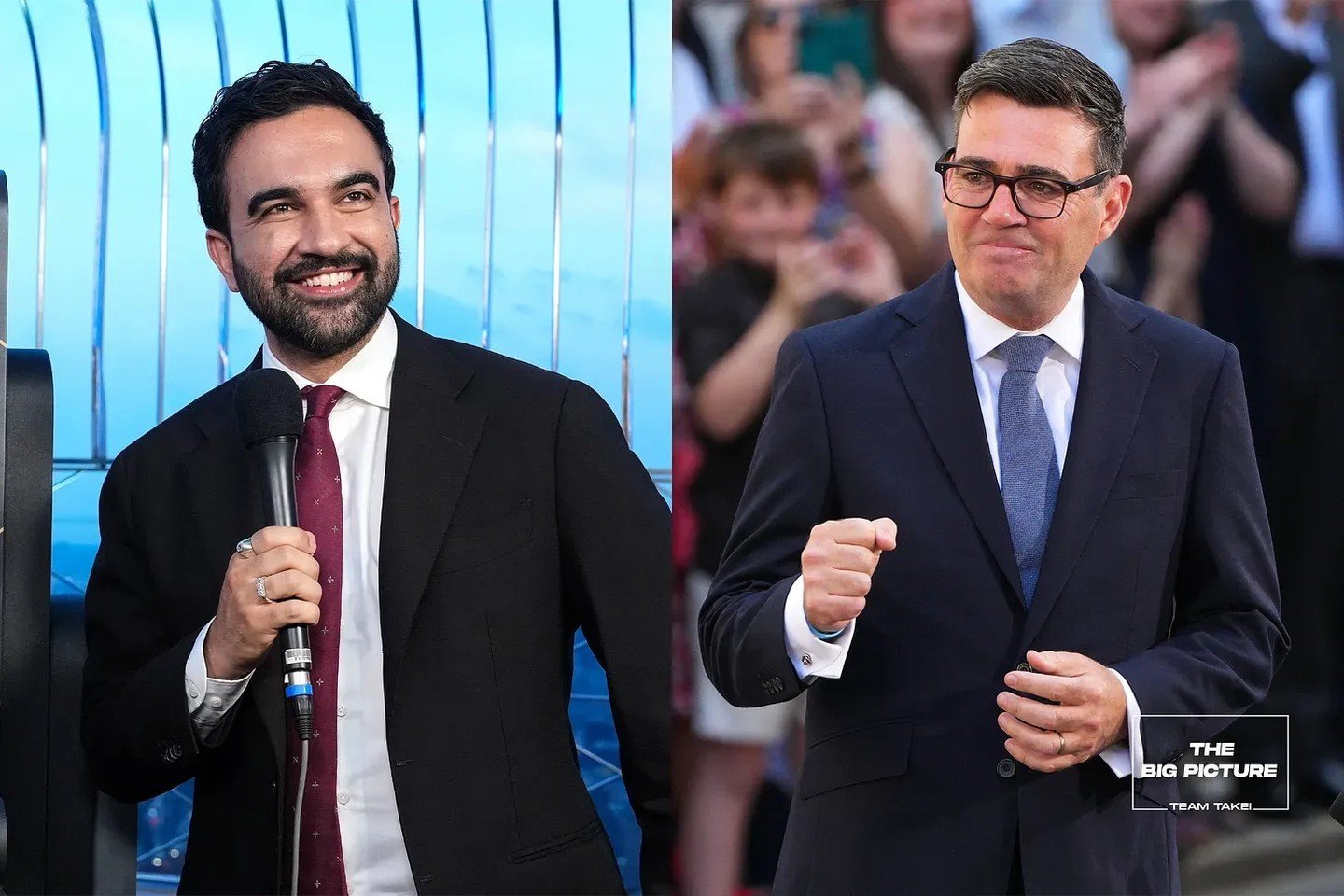
The UK and the U.S. have spent the past decade running a parallel experiment in political realignment. And with the ascension of Andy Burnham as UK’s new Prime Minister and the rise of Zohran Mamdani in the Democratic Party, the parallels between the two countries are echoing more loudly than ever.
In June, 2016, the UK narrowly voted to leave the European Union (EU.) The BREXIT or “British Exit” result was widely read as the nation’s working class revolt against a status quo they felt had abandoned them. Similarly, in November 2016, Donald Trump’s election was a massive rebuke to the political status quo in the U.S., as Trump successfully appealed to “the forgotten” working class voter. Both events broke their respective party systems in ways that are still working themselves out today.
The UK has seen seven prime ministers in ten years. In the U.S., the Democratic Party is still reckoning with Donald Trump’s return to power and how to respond to his increasingly unhinged authoritarian presidency.
For many, Mayor Mamdani is exactly what the Democratic Party needs in this moment. And now, as Andy Burnham succeeds former Labour leader Keir Starmer as Prime Minister, we have the latest iteration of this experiment across the Atlantic: a test of whether a party that lost working class voters to right-wing populism can win them back by moving toward a younger, more class-conscious, openly left-wing figure rather than doubling down on centrist competence.
The Loss of Working Class Voters
Trump’s 2016 general election victory was a watershed moment in U.S. politics. He was an unconventional politician who ran as the champion of working class voters, which had long been a core constituency of the Democratic Party’s coalition. Trump was able to win over enough of these voters in 2016, particularly in the crucial “rust belt” swing states of Pennsylvania, Michigan, and Wisconsin (aka the “Blue Wall”) by tapping into a deep backlash against globalization, the outsourcing of jobs, and increased immigration. Then, in 2024, Trump returned to power on populist calls to “lower prices on day one,” shut the border, and end foreign wars. While in 2008 Barack Obama won voters without a college degree 51-49%, according to Pew Research, in 2016 Trump won these same voters by 7% and then double that—56%-42%—in 2024. The rise of Trump was very much the story of the erosion of the Democratic Party’s support among working class voters.
That same story has played out in the UK over the past 10 years.