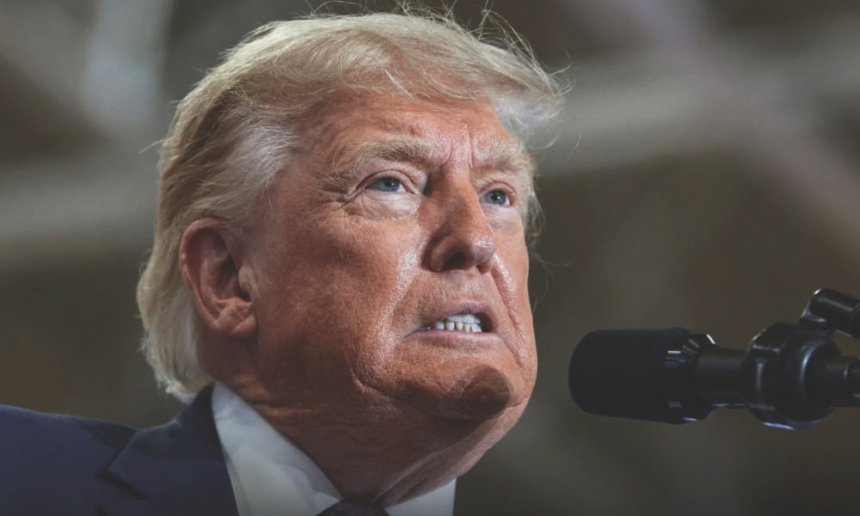
Former President Donald Trump suffered a significant legal setback on Wednesday after a federal judge permanently blocked most of his sweeping executive order aimed at reshaping U.S. election procedures.
U.S. District Judge Denise Casper ruled that the Constitution does not grant the president authority to unilaterally impose nationwide voting rules, stating that election administration is primarily the responsibility of Congress and individual states.
“The Constitution does not grant the President any specific powers over elections,” Casper wrote in her decision.
The ruling strikes down key provisions of Trump’s order, including requirements for documentary proof of citizenship when registering to vote, restrictions on mail-in ballots, and threats to withhold federal funding from states that refused to comply.
Critics argued that the order represented an attempt to centralize control over election administration and bypass the legislative process. The court agreed, finding that the executive branch had exceeded its constitutional authority.
Trump’s administration had argued that legal challenges were premature because the measures had not yet been fully implemented. However, the court determined that states had legitimate concerns as federal officials were already moving toward enforcement.
Despite the setback, Trump continues to push similar election reforms through Congress, particularly through the SAVE America Act, which includes proof-of-citizenship requirements for voter registration. While the legislation has passed the House of Representatives, it remains stalled in the Senate.
Supporters of the proposal argue that stricter rules are necessary to prevent noncitizens from voting. However, critics note that voting in federal elections by noncitizens is already illegal and extremely rare.
Voting rights advocates also warn that millions of eligible Americans could face difficulties obtaining the documentation required under such policies, potentially creating barriers for lawful voters.
The ruling represents one of the most significant judicial checks on Trump’s efforts to reshape election laws and reinforces the constitutional limits on presidential authority over the nation’s voting system.