A federal judge has delivered another major setback to the Pentagon’s efforts to restrict journalists’ access to the Defense Department, ruling that a policy requiring reporters to be accompanied by official escorts inside the Pentagon likely violated the First Amendment.
The June 30 decision by U.S. District Judge Paul Friedman marked another significant development in the ongoing legal battle between the Department of Defense and The New York Times over press access. The dispute has become one of the most closely watched First Amendment conflicts involving the federal government, raising fundamental questions about how far a national security agency can go when regulating journalists who report on its activities.
At the center of the controversy was a Pentagon policy requiring credentialed journalists to obtain an official escort whenever they entered and moved through the building. The Defense Department argued that the measure was necessary to protect sensitive information and prevent unauthorized disclosures. Pentagon officials maintained that journalists with unrestricted access could observe activity, interact with personnel and develop relationships that might contribute to the disclosure of classified or operational information.
Judge Friedman, however, questioned whether those national security concerns adequately explained the sweeping restrictions placed specifically on journalists.
In his opinion, Friedman expressed skepticism about the Pentagon’s explanation, including the argument that unescorted journalists created a particular security risk. He questioned why the timing of a journalist’s questions would necessarily increase the likelihood that a government employee would disclose classified information. The judge also pointed to the fact that the Pentagon’s stated rationale for the escort requirement appeared inconsistent with the policy’s broader history.
More importantly, the judge said there was substantial evidence suggesting that the policy could have been motivated, at least in part, by hostility toward the press.
That conclusion was significant because First Amendment law provides strong protections for journalists and news organizations against government retaliation based on their reporting. A government agency can impose legitimate security rules, but it cannot use national security as a pretext to punish journalists because officials dislike their coverage.
Friedman pointed to what he described as a sustained pattern of hostile statements by senior Defense Department officials toward the media. Those statements included repeated criticism of news organizations and journalists whose reporting was unfavorable to the administration or the Pentagon.
Among the statements considered by the court were comments by Defense Secretary Pete Hegseth criticizing what he described as relentlessly negative media coverage. The judge viewed the broader stream of comments as potentially important evidence when evaluating whether the Pentagon’s restrictions were genuinely motivated by security concerns or were partly retaliatory.
The distinction is crucial.
National security agencies unquestionably have legitimate reasons to protect classified information. The Pentagon handles military operations, intelligence, weapons systems, strategic planning and other information that can pose serious risks if improperly disclosed. Journalists working inside such an institution cannot simply ignore security procedures.
But press freedom does not disappear at the doors of the Pentagon.
The First Amendment protects the ability of journalists to gather and report information about government activities. While journalists do not possess an unlimited constitutional right to enter every government facility whenever they wish, courts have repeatedly recognized the importance of meaningful access when the government creates systems for press coverage.
The Pentagon has historically provided credentialed reporters with access that allowed them to attend briefings, speak with officials and conduct spontaneous interviews. Reporters argue that these informal interactions are an essential part of journalism. Requiring an escort for every movement can make those interactions considerably more difficult.
The New York Times argued that the escort requirement interfered with the normal process of reporting by preventing journalists from independently moving through the Pentagon, approaching sources and developing relationships with officials. The newspaper filed a new lawsuit in May 2026 challenging the policy.
The dispute is part of a much larger confrontation that began in 2025, when the Pentagon introduced increasingly restrictive rules governing journalists. Earlier policies required reporters to accept restrictions concerning information that had not been approved for public release. Many major news organizations refused to accept those terms, arguing that the rules interfered with ordinary newsgathering and threatened constitutional protections.
In March 2026, Judge Friedman ruled against key portions of the Pentagon’s earlier press policy, finding that the restrictions violated First Amendment and due process protections. The Defense Department subsequently introduced additional measures, including the escort requirement, leading to another round of litigation.
The June 30 ruling therefore represented more than a disagreement over where reporters could walk inside the Pentagon. It became another test of the limits of executive power and the relationship between government agencies and the independent press.
For supporters of press freedom, the ruling sent a powerful message: government officials cannot automatically invoke national security whenever journalists challenge official narratives.
For the Pentagon, however, the issue remains fundamentally about protecting sensitive military information.
Pentagon spokesman Sean Parnell strongly criticized the decision, arguing that unescorted access had previously contributed to unauthorized disclosures of operational plans and intelligence. He said the department had a responsibility to protect military personnel and classified information and indicated that the government would appeal.
The legal battle did not end with Friedman’s June 30 decision.
On July 16, a federal appeals court temporarily reinstated the Pentagon’s escort requirement while the government’s appeal continues. That development means the June 30 ruling should not be understood as the final word on the controversy. The broader constitutional questions remain under litigation.
Nevertheless, the case has already become an important chapter in the modern debate over press freedom in the United States.
The controversy illustrates a difficult balance between two legitimate principles. The government has a duty to protect national security and classified information. At the same time, citizens have a right to know how their government and military are operating, particularly when the country is involved in major military operations.
An independent press serves as one of the principal mechanisms through which that information reaches the public.
The Pentagon dispute also demonstrates why the First Amendment is particularly important when government officials are uncomfortable with media coverage. Journalism is not designed merely to repeat statements issued by government agencies. Reporters are expected to ask difficult questions, investigate conflicting accounts and pursue information that officials may prefer to keep out of the public spotlight.
That process can be uncomfortable for those in power.
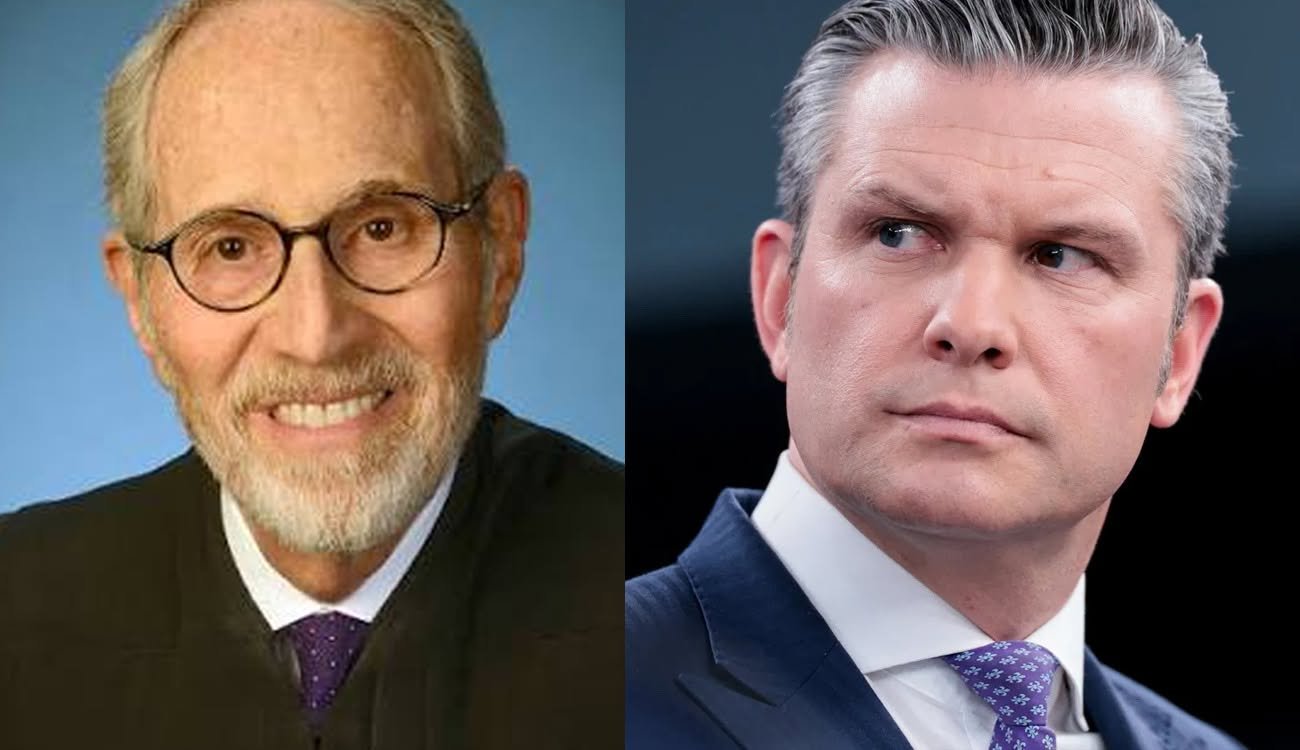
The images surrounding the controversy have therefore come to represent more than a dispute between one administration and one newspaper. They symbolize a broader struggle over how much independence journalists should retain when covering the most powerful institutions in government.
For now, the courtroom remains the main arena for that fight.
The June 30 ruling gave press-freedom advocates an important victory, while the July 16 appeals decision demonstrated that the legal battle is far from over. As the case continues, the courts will ultimately have to determine where legitimate national security protections end and unconstitutional restrictions on journalism begin.
Whatever the final outcome, the debate reaches far beyond the Pentagon.
At its core is a question that has defined democratic societies for generations: How much freedom should journalists have to question those who hold power?
The answer could have consequences not only for reporters working inside the Pentagon, but for the future relationship between the American government, the military and the independent press.