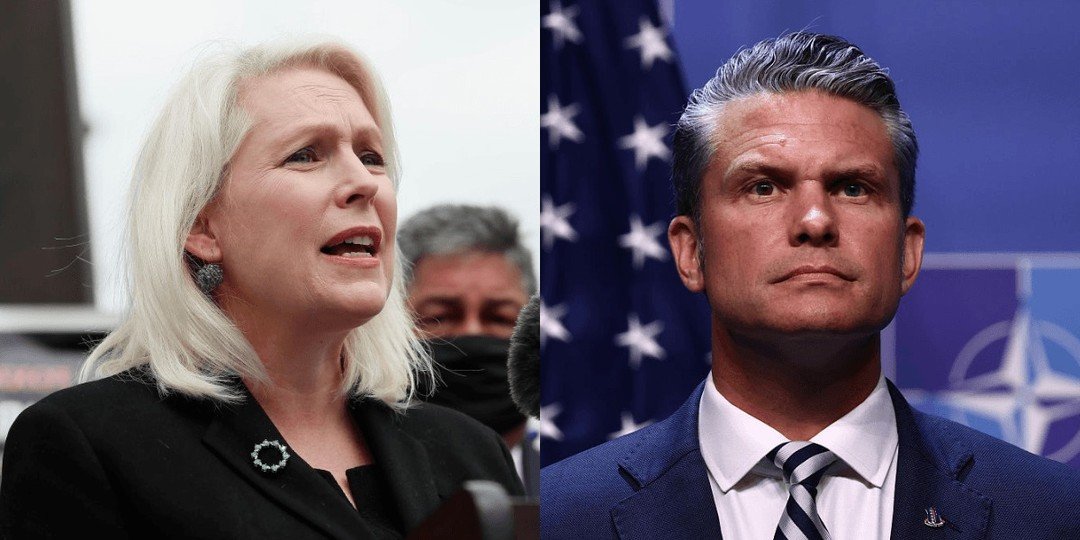
A newly announced Pentagon initiative aimed at prosecuting government leakers has ignited a fresh political controversy after Senator Kirsten Gillibrand responded with a sharp reminder of Defense Secretary Pete Hegseth’s own past handling of sensitive military information.
The exchange quickly became one of the day’s most discussed political stories after Gillibrand accused Hegseth of hypocrisy by referencing the Signal messaging scandal that dominated headlines last year. Her response spread rapidly across social media, with critics arguing that the defense secretary’s own record on classified communications undermines his latest crackdown on unauthorized disclosures.
The controversy also arrives amid growing debate over press freedom, government transparency, and the treatment of journalists covering national security issues.
Pentagon Announces New Anti-Leak Task Force
In a video released on social media, Hegseth announced that the Department of Defense and the Department of Justice have established a joint task force dedicated to identifying and prosecuting individuals responsible for leaking information from the Pentagon.
According to Hegseth, unauthorized disclosures threaten military operations, compromise intelligence gathering, and place American service members at unnecessary risk.
He described the current security environment as increasingly dangerous and argued that safeguarding sensitive information must become a top priority across every level of the Defense Department.
To strengthen enforcement, Hegseth said he had delegated expanded investigative authority to the Office of General Counsel within the Defense Department.
Under the new directive, Pentagon offices must cooperate fully with leak investigations and respond to requests from the Office of General Counsel within 48 hours.
The defense secretary portrayed the initiative as an essential step toward protecting national security.
“We live in a dynamic and dangerous threat environment,” Hegseth said in the announcement, emphasizing that unauthorized disclosures can inflict “exceptionally grave damage” on military operations.
Gillibrand’s Immediate Response
The announcement prompted an almost immediate reaction from Democratic Senator Kirsten Gillibrand of New York.
Rather than directly criticizing the new task force itself, Gillibrand questioned Hegseth’s credibility in leading such an effort.
Posting on social media shortly after Hegseth’s announcement, she wrote:
“We have identified one.”
She accompanied the remark with a previous news headline regarding an investigation into Hegseth’s own handling of military communications.
The headline referenced findings from a Pentagon watchdog that examined Hegseth’s use of the encrypted messaging application Signal during discussions involving U.S. military operations.
Gillibrand’s response quickly gained traction online, with many users describing it as a pointed reminder of the controversy that surrounded Hegseth earlier in his tenure.
The Signal Chat Controversy Returns
The criticism centers on events that unfolded the previous year when reports revealed that Hegseth had discussed details of U.S. military operations involving Yemen through a Signal group chat.
According to published reports, the conversation included family members and close associates, including his wife and brother.
Critics argued that discussing sensitive operational information through a personal messaging application represented a serious lapse in judgment, regardless of whether the information technically met the legal definition of classified material.
The controversy intensified after reports emerged that an aide had warned Hegseth against transmitting operational details over unsecured communication channels before the military operation began.
Those reports fueled calls from Democratic lawmakers for his resignation.
The Atlantic Revelation
The Signal controversy expanded further after The Atlantic published reporting by editor Jeffrey Goldberg.
Goldberg stated that he had unexpectedly been added to another Signal group chat involving several senior Trump administration officials.
According to the report, discussions inside the chat involved military strategy related to operations in Yemen.
The revelation prompted widespread concern among national security experts about communication practices within senior levels of government.
Administration officials disputed aspects of the reporting, while insisting no classified information had been improperly disclosed.
Nevertheless, the incident became one of the administration’s most significant national security controversies.
Hegseth Defended Himself
When questioned about the Signal chats, Hegseth strongly denied wrongdoing.
He characterized the allegations as politically motivated attacks fueled by disgruntled former employees.
The defense secretary also referenced separate Pentagon leak investigations involving former advisers who had been removed during internal inquiries.
According to Hegseth, critics were recycling old allegations in an attempt to undermine his leadership.
Supporters argued that investigations had not established criminal misconduct.
Critics countered that someone advocating strict penalties for leaks should be held to the same standard regarding his own communications.
Social Media Highlights Claims of Double Standards
Gillibrand’s post quickly resonated across social media.
Numerous commentators argued that the defense secretary’s announcement appeared inconsistent with his own recent history.
Many questioned whether officials accused of mishandling sensitive information should oversee aggressive prosecutions against others accused of similar conduct.
Some users described Gillibrand’s response as exposing a perceived double standard inside the administration.
Others argued that the issue should be separated from broader efforts to prevent genuine national security leaks.
The online debate reflected continuing political divisions surrounding the administration’s handling of classified information and accountability.
Press Freedom Concerns Grow
The timing of the task force announcement has also intensified concerns among journalists and media organizations.
Only days before Hegseth unveiled the initiative, the Department of Justice reportedly subpoenaed four New York Times reporters as part of a federal grand jury investigation.
The subpoenas sought testimony connected to reporting on security concerns involving a Qatari-donated aircraft reportedly used by President Donald Trump during travel to the NATO summit in Turkey.
The move drew criticism from press freedom advocates, who argued that compelling reporters to reveal information could discourage investigative journalism involving national security matters.
Media organizations warned that aggressive leak investigations risk creating a chilling effect on whistleblowers and reporters alike.
The New York Times Responds
The New York Times sharply criticized the subpoenas.
Attorney David McCraw described the government’s actions as an attempt to intimidate journalists rather than pursue legitimate law enforcement objectives.
He argued that investigative reporting plays a critical role in informing the public about government actions and warned against measures that could discourage sources from speaking with reporters.
Press freedom organizations echoed those concerns, emphasizing that protecting confidential sources has long been considered essential to investigative journalism.
Government officials, however, have maintained that unauthorized disclosures involving national security can jeopardize military personnel and intelligence operations.
Balancing Security and Transparency
The controversy illustrates the longstanding tension between protecting sensitive government information and ensuring public accountability.
Successive administrations from both political parties have pursued leak investigations while simultaneously facing criticism over their own handling of classified material.
Supporters of stronger leak enforcement argue that unauthorized disclosures can compromise military missions, expose intelligence capabilities, and endanger service members.
Critics counter that overly aggressive investigations risk discouraging legitimate whistleblowing and investigative reporting that exposes government misconduct.
The debate has become increasingly prominent as encrypted communication platforms, digital messaging applications, and social media transform how government officials communicate.
Political Fallout Continues
For Hegseth, the renewed attention to the Signal controversy represents another political challenge as he attempts to strengthen internal security procedures within the Pentagon.
For Democrats such as Gillibrand, the episode provides an opportunity to question the administration’s consistency on accountability and transparency.
Whether the new leak task force results in significant prosecutions remains to be seen, but its launch has already generated substantial political controversy.
Rather than focusing solely on the administration’s plans to prevent future leaks, much of the public discussion has instead centered on whether the official leading the initiative has adequately answered questions about his own past handling of sensitive military communications.
As investigations into government leaks continue and scrutiny of national security practices intensifies, the debate over accountability, transparency, and equal application of standards is likely to remain at the center of Washington politics.